
Experts Say Green Card Policy Could Reshape How Families, Workers and Employers Navigate the U.S. Immigration System
For generations, the promise of legal immigration to the United States followed a familiar path.
Each story is different, but many immigrants share one common thread: once eligible, applicants could seek permanent residency without leaving the country.
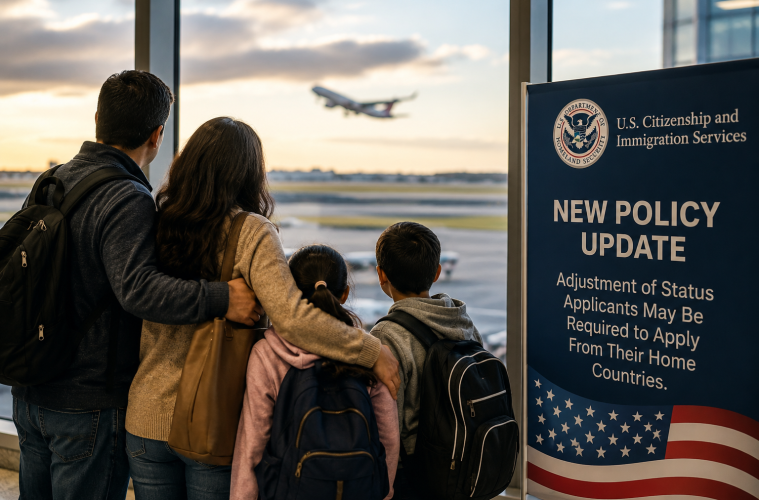
Immigration attorneys and policy experts say a new U.S. Citizenship and Immigration Services policy memo could fundamentally change that expectation, creating new uncertainty for immigrants while raising broader questions about the future of legal immigration in America.
During an American Community Media briefing held on June 5, legal experts said the memo encourages immigration officers to treat adjustment of status—the process of applying for a green card from inside the United States—as an “extraordinary” form of relief rather than a long-established pathway created under federal immigration law.
“The fact is adjustment of status is not an extraordinary remedy,” said Jeff Joseph, president of the American Immigration Lawyers Association.
Joseph argued that Congress intentionally created adjustment of status as a legal option alongside consular processing abroad and warned that redefining it through agency policy could have sweeping consequences for applicants across the country. He also said he expects the policy to face immediate legal challenges.
More Than an Immigration Issue
While much of the public discussion has focused on immigrant families, speakers said the implications extend well beyond individual applicants.
Julia Gelatt, associate director of the U.S. Immigration Policy Program at the Migration Policy Institute, explained that the policy could affect thousands of people who entered the United States legally before becoming eligible for permanent residency through marriage, employment or other family relationships.
Applicants required to leave the country could face costly travel, extended waits for visa appointments and, in some cases, lengthy separations from spouses and children.
Others who have accumulated unlawful presence after legally entering the country could trigger existing immigration bars simply by departing for a required interview abroad.
“The people who are in the most difficult situation are people who are now living in the United States without status” after entering legally, Gelatt said.
Businesses Are Paying Attention
The business community also has reason to watch closely.
Xiao Wang, co-founder and CEO of Boundless Immigration, said decades of workforce planning have been built around a predictable immigration process that allows many international students and skilled professionals to transition from temporary visas to permanent residency while remaining in the United States.
Healthcare systems, research institutions, universities and technology companies all depend on that predictability when recruiting talent from around the world.
Changing the rules in the middle of that process, Wang said, introduces uncertainty for employers that have invested years—and often thousands of dollars—in recruiting and retaining highly skilled workers.
He also questioned what the policy signals to future talent considering whether to build careers in the United States.
“We collectively as a community… have far more ability to influence this administration where it actually lands,” Wang said, noting that the policy continues to evolve in response to public and industry feedback.
A Larger Policy Debate
The briefing also highlighted a larger debate that extends beyond one policy memo.
Supporters of the administration have argued for tighter immigration controls and increased scrutiny of immigration benefits, saying reforms are needed to strengthen enforcement and restore integrity to the system.
The legal experts participating in the briefing countered that significant policy changes should move through the formal federal rulemaking process rather than being implemented through agency guidance alone. They argued that doing so allows public participation, transparency and legal review before new standards take effect.
That legal question is expected to become the centerpiece of multiple federal lawsuits.
What Comes Next?
Despite the uncertainty, panelists repeatedly urged immigrants not to make decisions based on social media speculation or fear.
Instead, they encouraged people to understand how the policy applies to their specific circumstances and seek qualified legal advice before changing travel plans or immigration strategies.
“Going to a lawyer annually should be considered like the same as a medical checkup,” Joseph said. “If you’re concerned about your status, have an annual checkup with your lawyer… and make sure that you’re not vulnerable.”
As the courts weigh the policy and federal officials continue refining its implementation, one thing is already clear: the debate is no longer simply about how immigrants receive green cards.
It is about what legal immigration to the United States will look like in the years ahead.
