
Experts Say Security, Public Trust and Democratic Institutions Are Reshaping Politics Throughout the Region
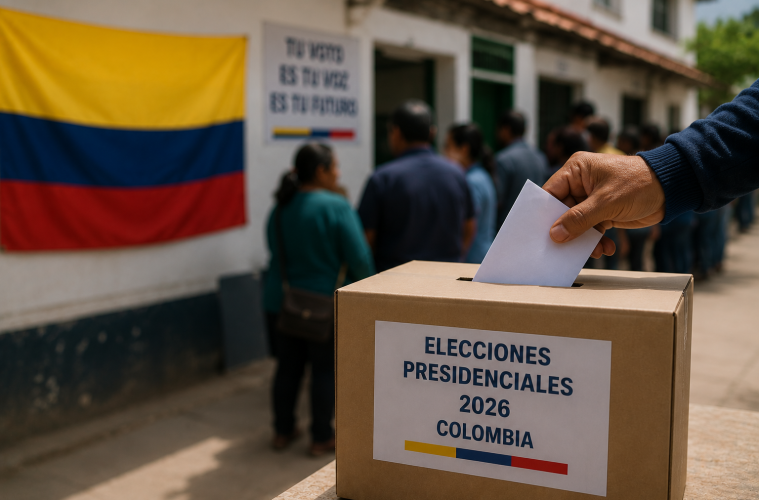
When Colombians head to the polls for their presidential runoff election, they will be choosing more than the country’s next leader.
According to scholars and journalists participating in an American Community Media (ACOM) briefing held on June 12, the election reflects broader questions confronting democracies across Latin America: How should governments respond to rising insecurity? How can democratic institutions rebuild public trust? And what happens when citizens no longer believe government is solving their most urgent problems?
Those questions extend beyond Colombia’s borders. Throughout the discussion, panelists pointed to similar debates unfolding elsewhere in the region, where concerns about crime, migration, organized criminal networks and economic uncertainty continue influencing elections and public opinion.
Beyond a Left-Right Political Divide
Political scientist Beatriz Magaloni challenged a common assumption about Latin American politics.
Rather than describing Colombia’s election as a straightforward contest between the political left and right, she argued that many voters are responding to different experiences with government itself.
“What we are observing is really not ideological per se,” Magaloni said. “It’s the way people experience democracy in their everyday lives and the way they experience what they see as the state failing them.”
She described two distinct realities.
Urban residents often identify crime and personal safety as their greatest concerns, while many rural communities continue dealing with armed groups, displacement and disputes over land and natural resources. Although those experiences differ, both groups share a common expectation that government should provide security and opportunity.
Democracy Under Pressure
Magaloni said research conducted across several Latin American countries suggests many citizens remain committed to democratic values even as confidence in democratic institutions declines.
Surveys discussed during the briefing found that concerns about public safety consistently rank among voters’ highest priorities. Panelists suggested that when governments fail to address those concerns, some voters become more willing to support leaders who promise rapid solutions, even when those approaches generate debate about civil liberties or democratic norms.
“Democracy has to deliver,” Magaloni said, emphasizing that effective governance remains essential to maintaining public confidence in democratic institutions.
The Human Cost Behind the Headlines
Journalist and documentary photographer Manuel Ortiz encouraged audiences to look beyond campaign rhetoric and consider the experiences of communities living with the consequences of decades of conflict.
Drawing from recent reporting in Colombia, Ortiz described visiting Indigenous and Afro-Colombian communities working to recover land lost during years of violence and displacement. He said many of the conflicts reported in national headlines have deep historical roots that cannot be understood through political slogans alone.
His reporting illustrated a recurring theme throughout the briefing: national elections often carry different meanings for communities depending on their history, geography and daily challenges.
Regional Implications
Panelists also discussed how developments in Colombia could influence broader conversations about governance throughout Latin America.
Topics raised during the briefing included migration, organized crime, peace agreements, land restitution and regional cooperation. Several speakers also offered their own assessments of how international political movements and security policies may shape future democratic debates across the hemisphere. Those observations reflected the views of the individual panelists rather than established outcomes.
The discussion underscored a central theme: Colombia’s election is being watched not only for who wins, but for what the campaign reveals about public expectations of democratic government in a region still confronting the legacies of conflict, inequality and political polarization.
More Than Election Night
Election results often dominate headlines for a day or two before public attention shifts elsewhere.
The experts participating in the ACOM briefing suggested that Colombia’s runoff deserves a longer view.
Regardless of the outcome, they said the country’s next government will face enduring challenges that include strengthening public security, addressing organized crime, protecting vulnerable communities and maintaining confidence in democratic institutions. Those issues, they noted, are not unique to Colombia but are increasingly shaping political conversations throughout Latin America.
For readers in the United States, the briefing offered an important reminder that events in neighboring countries often carry implications beyond national borders. Migration, trade, regional security and democratic stability are closely connected throughout the Americas, making Colombia’s election part of a much larger conversation about the future of governance in the Western Hemisphere.
