

Houston has become a national model for reducing homelessness, cutting the number of people without shelter by more than 60 percent since 2011. But housing experts say the city’s challenge isn’t only about getting people housed — it’s making sure they can stay in their homes.
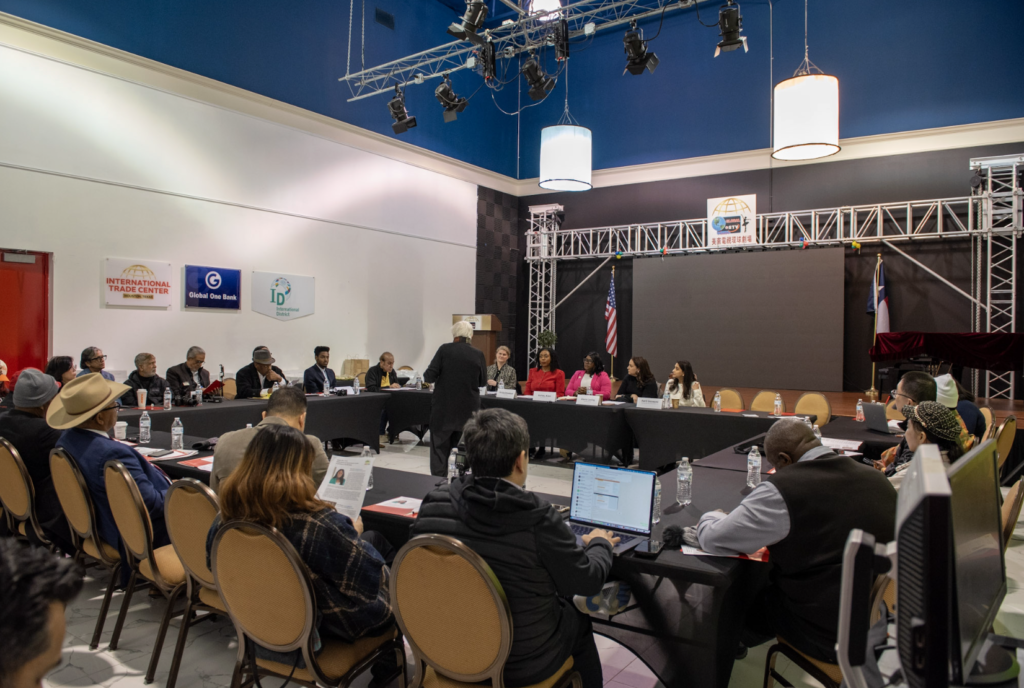
That reality took center stage during a recent Houston Community Media briefing, where housing leaders, researchers, and service providers examined how land use, affordability, rental assistance, homelessness response, and emergency services must work together to prevent people from falling back into crisis.
“Housing is not a finish line,” said Alexis Loving, president and CEO of SEARCH Homeless Services. “It’s the beginning.”
Affordable Housing Starts Before Construction
Christa Stoneham, president and CEO of the Houston Land Bank, explained that affordability begins long before a home is built — with land.
“My job is to transform Houston one site at a time,” Stoneham said.
The Houston Land Bank works to remove bureaucratic barriers and activate underused public land for community benefit. Instead of building homes itself, the agency transfers land at discounted rates to builders, allowing savings to be passed on to income-eligible buyers.
Stoneham highlighted redevelopment projects involving long-abandoned or contaminated properties, including a former trash incinerator in the East End and the former Yellow Cab headquarters near Northside — sites now being turned into affordable housing, green space, and resilient neighborhoods.
“We don’t just want to build back — we want to build smarter,” she said, emphasizing the need for housing that can withstand floods, freezes, and extreme heat.
Making Affordability Stick
Ashley Allen, executive director of the Houston Community Land Trust, focused on what happens after homes are built — and why affordability so often disappears.
“The community land trust model allows for long-term and permanent affordability,” Allen said.
Community land trusts separate land ownership from homeownership, keeping land under collective community control. By restricting resale prices and stabilizing property taxes, the model ensures that public investment in affordability isn’t lost to the private market.
Allen noted that Houston’s land trust serves a broad range of residents — including teachers, retirees, public defenders, and recent graduates — all navigating a housing market where even modest price increases can push people out.
“We don’t have a problem building in Houston,” she said. “We have a problem sustaining affordability.”
Rental Assistance Exists — Access Does Not
For renters, Housing Choice Vouchers remain one of the most important tools for stability — but access is limited.
Anna Rhodes, an associate professor of sociology at Rice University and researcher with the Kinder Institute of Urban Research, explained that vouchers are the federal government’s largest rental assistance program. Yet chronic underfunding means only a fraction of eligible households receive help.
“We are only serving about one in four eligible households,” Rhodes said.
In Houston, waitlists for vouchers are currently closed. And in Texas, landlords can legally refuse to rent to someone because they use a voucher — a policy gap that creates additional barriers in an already competitive rental market.
Housing Requires Support — Not Just a Key
Loving stressed that housing placements alone do not end homelessness.
“It’s not just about a unit — it’s about stability, care, and support,” she said.
Many people SEARCH serves have experienced long-term homelessness, trauma, health challenges, or financial instability. Moving into housing can be disorienting and requires ongoing case management, access to health care, and help rebuilding routines and community connections.
Loving also challenged the assumption that housing placements that don’t stick reflect a lack of effort.
“None of us are independent,” she said. “We all rely on community.”
211: The Safety Net People Turn to First
When housing becomes unstable, many residents don’t start with a housing agency — they call 211.
Aarti Goswami, assistant vice president of community outreach for United Way Greater Houston, described 211 as a free, confidential, 24/7 helpline connecting people to housing assistance, food access, utility help, transportation, and mental health services.
“211 is the front door to accessing community resources,” Goswami said.
United Way Greater Houston operates one of the largest 211 systems in the country, handling more than one million connections each year. Demand surged during the pandemic and has remained high — especially for rent and utility assistance.
“Every time you call 211, you speak to a real live person,” Goswami said.
A System Under Strain
Across the briefing, speakers returned to a shared message: Houston’s housing challenges cannot be solved by a single program or policy. Affordable land, permanent affordability, rental assistance, homelessness services, and emergency support must function as a coordinated system — especially as public funding tightens and demand grows.
For residents needing help with housing, rent, utilities, food, transportation, or emergency services, assistance is available by dialing 211 or visiting 211texas.org.
