
By: Natalie J. Greene
For generations, children were often expected to keep their struggles to themselves. Feelings were dismissed as phases. Anxiety was called worrying too much. Depression was mistaken for attitude. Conversations about mental health frequently ended before they began.
Today’s young people are taking a different approach.
During a recent Houston Community Media briefing on youth mental health, educators, researchers and therapists described a generation that is increasingly willing to talk openly about emotional well-being, ask for support and advocate for its needs. The question, they suggested, is whether the adults around them are prepared to listen.
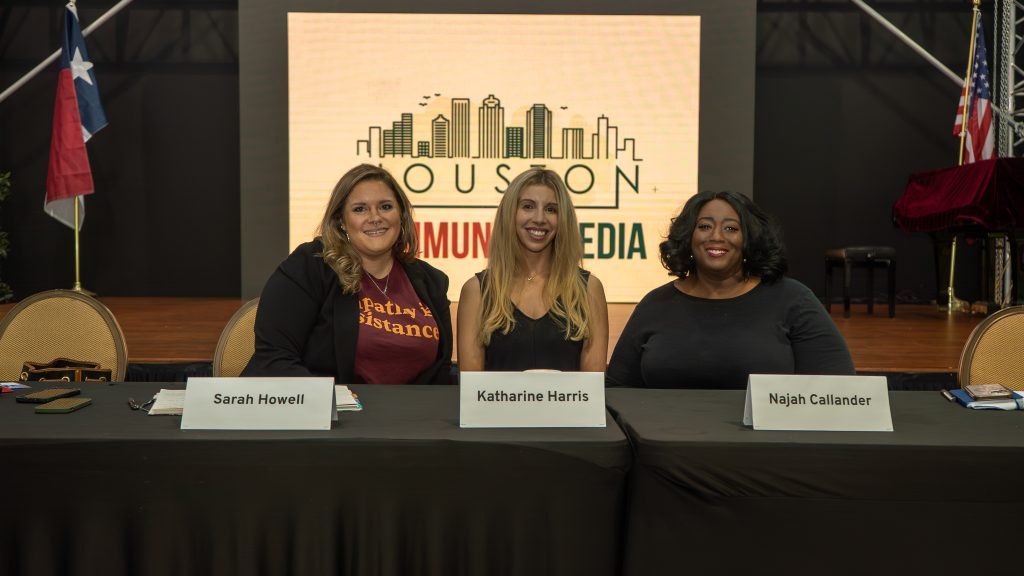
“What we are realizing and what we know is that our students are reaching out and they’re flagging that they need the mental health support,” said Najah Callander, deputy chief of family and community partnerships for Houston ISD.
That willingness to speak up comes at a critical time.
Data presented during the briefing showed that nearly 42% of Houston ISD students surveyed reported feeling so sad or hopeless that they stopped participating in their normal activities. Fourteen percent reported attempting suicide, while roughly one in five said they had missed school because they felt unsafe.
The survey also found that approximately 16% of students reported being bullied on campus and 14% reported being bullied online. Female students, Black and Latino students, and students identifying as LGBTQ+ reported higher rates of several mental health challenges.
For many parents, guardians and caregivers, those numbers can feel overwhelming. Yet the experts gathered for the discussion repeatedly returned to a common theme: awareness is growing, young people are asking for help, and communities have an opportunity to respond before struggles become crises.
Katharine Harris, a fellow in drug policy at Rice University’s Baker Institute for Public Policy, said the data reflects a troubling trend that deserves attention from families, schools and policymakers alike.
“We have an increase in students who report having considered suicide, having made a plan for it or having attempted it,” Harris said.
Harris noted that the conversation extends beyond mental health diagnoses. Feelings of safety, belonging and connection all play a role in a young person’s overall well-being.
“One of the reasons that I would call it a crisis is because not only do we have this problem, but we don’t have people really, at a large scale level, working on solutions,” she said.
Within Houston ISD, efforts to meet those needs have expanded through the district’s Sunrise Centers, which connect students and families with counseling, healthcare, food assistance and other support services. Last year alone, the centers provided more than 2,700 hours of mental health services.
Still, some of the most powerful moments of the discussion focused less on programs and more on relationships.
Sarah Howell, a therapist who works extensively with immigrant youth, trauma survivors and families throughout Southwest Houston, said many young people are not simply looking for solutions. They are looking for connection.
One message, she said, comes up again and again in her conversations with youth:
“See me.”
Behind that simple request is a desire shared by many young people—to feel recognized, understood and valued by the adults in their lives.
Howell believes meaningful relationships remain one of the most effective tools available to families and communities.
“Relationship is my answer,” she said.
She emphasized that support often begins with something much simpler than people imagine.
“Being able to see people every day, not for therapy every day, but to have contact, to be a consistent presence, makes a difference,” Howell said.
For women who serve as mothers, grandmothers, aunts, teachers, mentors and caregivers, the conversation may feel especially familiar. Many are already carrying the responsibility of helping others navigate difficult moments while managing their own challenges at the same time.
The encouraging news is that today’s young people appear increasingly willing to reach out rather than suffer in silence.
For Callander, that may be one of the most hopeful signs of all.
“To be able to raise your hand and say, ‘I need something I’m not getting,’ gives me a lot of hope,” she said.
Perhaps the challenge for adults is not figuring out whether young people are struggling.
They are already telling us.
The question is whether we are creating enough space to hear them.
