
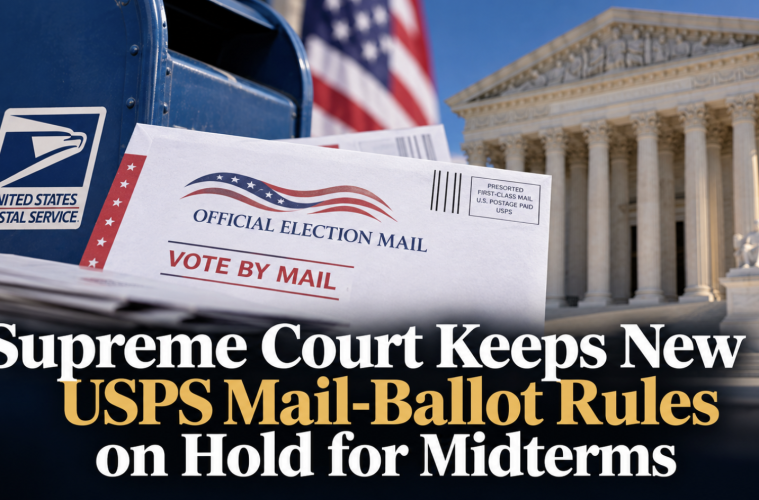
Voters who plan to cast ballots by mail in the November midterms can continue using their states’ existing systems after the U.S. Supreme Court left in place an injunction blocking new federal requirements for election mail.
The Sept. 14 order prevents the U.S. Postal Service from enforcing key portions of a rule that would have required election officials to redesign ballot envelopes, submit voter information through a new federal portal and use voter-specific barcodes.
The rule arrived less than 70 days before Election Day, after election preparations were already underway in many states. Attorneys challenging it said some jurisdictions had already designed and printed ballot envelopes, while the federal portal needed to implement the requirements was not yet operational.
A federal district court blocked the requirements for the midterms, finding that implementing them so close to the election threatened to disenfranchise eligible voters. USPS asked the Supreme Court to allow the rule to take effect while the case proceeded. The Court declined.
Justice Brett Kavanaugh wrote separately that election officials did not have enough time to reasonably implement the rule before the election. Justices Samuel Alito and Clarence Thomas dissented.
The decision has particular significance because mail voting is used by millions of Americans, including voters with disabilities, students, rural residents, military personnel and Americans living overseas.
During a Sept. 22 American Community Media briefing, Ethan Herrnstein, an attorney with the ACLU Voting Rights Project who worked on the case, summarized the immediate effect:
“The new USPS restrictions are blocked. USPS cannot use them to refuse to deliver mail ballots.”
The ruling does not establish one national system for voting by mail. Eligibility, application deadlines, ballot-return procedures and other requirements continue to vary by state.
Attorneys participating in the briefing urged voters to check their state and local election requirements, confirm their registration, request mail ballots early when required and follow instructions carefully. Where available, voters can also use ballot-tracking systems to monitor whether their ballots have been received.
The Supreme Court’s action also does not end the legal dispute. The current order involves a preliminary injunction, and litigation over the USPS rule is expected to continue after the election.
For November, however, the immediate consequence is much simpler: the new USPS requirements will not govern the midterm election, and voters using mail ballots should follow the existing rules in their states.
