
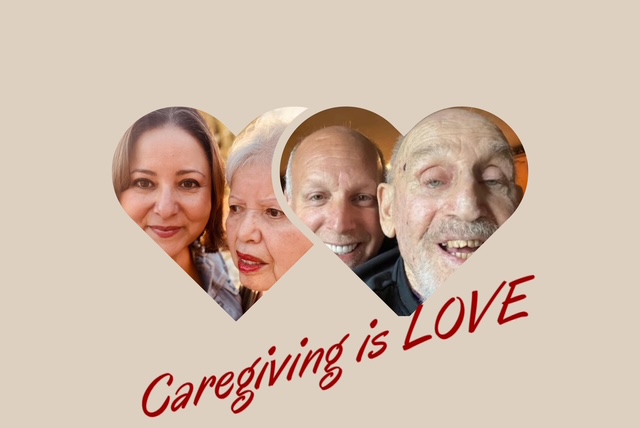
Across the country, women are carrying a load no one prepared them for — raising children, maintaining careers, holding households together, and still stepping in as caregivers for aging parents or relatives with chronic illness. A recent American Community Media briefing brought together leading experts and real-life caregivers to explain what this crisis looks like, why women shoulder most of it, and where support actually exists.
“We don’t realize that we are caregivers”
For Alma Valencia, a full-time caregiver and daughter of a parent living with dementia, the journey has spanned more than a decade.
“My mom is living with frontotemporal dementia. We have been on the journey for over 10 years,” she said.
Like many women, Valencia didn’t recognize that she had been given a new role.
“We don’t realize that we are caregivers,” she said. “We step into the role because we’re good daughters and good sons helping each other out. But being a full-time caregiver is a different experience.”
Valencia eventually became her mother’s financial and legal advocate.
“I became her power of attorney and took her to the doctor,” she said. “She was diagnosed with depression and alcoholism, and a few years later she was diagnosed with dementia.”
All of this happened while Alma was working as a Technical Designer, a career she held for more than 20 years, all while raising two children. The pandemic pushed a breaking point, and her mother moved into her home — forcing Valencia to leave her career.
Her message to women navigating similar struggles is one of resilience: “Caregiving is hard, but not impossible. Until there’s a cure, there’s community. You have to find your community.”
A son’s perspective: “It is extremely difficult”
Dan Salinger, a family caregiver from California, brings the perspective of an adult child caring for a parent in their 90s.
“I take care of my dad, who is 93 years old,” he said. “I was a caregiver long before I knew I was a caregiver.”
His father’s decline now requires complete support. “We help him with the bathroom, with showers, eating, getting out of bed, going to bed. Every single need now requires someone to be there.”
Salinger didn’t sugarcoat the challenge: “It is extremely difficult,” he said. “The financial pressure, the isolation, and the need for breaks are very real.”
But he also shares how caregiving transformed him for the better.
“Caregiving is the most difficult thing I’ve ever undertaken, but it’s also one of the most rewarding,” he said. “I am a better person. I am more empathetic.”
His advice is simple and honest: “Don’t be afraid to take on caregiving. It is tough, but it is doable.”
“None of us can thrive in isolation”
Paul Dunaway, Director of the Sonoma County Adult and Aging Division, oversees a major system of support programs for older adults and family caregivers. He says the country must do more to meet caregivers where they are.
“If I had to pick one war cry, it’s the need to recognize and deliver on the needs of caregivers,” Dunaway said. “Caregiving is intensely personal and profoundly shared. It can be deeply isolating. None of us can thrive in isolation.”
Dunaway explained that local Area Agencies on Aging (AAAs) provide hands-on help like respite care, support groups, dementia training, counseling, and emergency preparedness programs.
“Whatever role you play as a caregiver, there’s a community of care for you,” he said.
His biggest message to others in this position: stop believing you must do everything alone. “We have prioritized independence entirely too much,” he said. “The word should be interdependence — aging in place, together.”
“We are seeing caregiving lasting 10 years or more”
Dr. Donna Benton, Director of the USC Family Caregiver Support Center and the Los Angeles Caregiver Resource Center, has spent decades studying the changing landscape of caregiving.
“With the aging population, we are seeing caregiving lasting 10 years or more,” Benton said. Families are now responsible for “tasks like changing needles and doing pain management, which scares many families.”
She explained a major trend reshaping family care: hospital-level care shifting into homes. “Things that used to be done in hospitals are now part of the trend called hospital at home,” she said.
But Benton emphasized that families continue caregiving for the same core reason: love and dignity. “We provide care because we want dignity and respect for the person we’re caring for,” she said.
Her advice: act early, before crisis hits. “Advocate for yourself and your family. Caregiving is a family affair. Start early.”
Women deserve support — not silence
From managing households and raising children to leaving careers and caring for aging parents, women remain the invisible backbone of America’s long-term care system.
As Valencia puts it plainly, “Caregiving is hard, but not impossible.”
And with resources, information, and community — women don’t have to do it alone.
For more information, visit the American Society on Aging.
